Maintaining a predictable, profitable revenue cycle requires constant vigilance against tightening payer guidelines, complex coding updates, and rising administrative costs. For multi-specialty practices, a single flaw in the Revenue Cycle Management (RCM) pipeline can balloon days in Accounts Receivable (A/R) and lock up vital operating capital.
Whether your practice specializes in Cardiology, Podiatry, OB/GYN, or Nephrology, implementing structured RCM controls is essential for long-term financial stability.
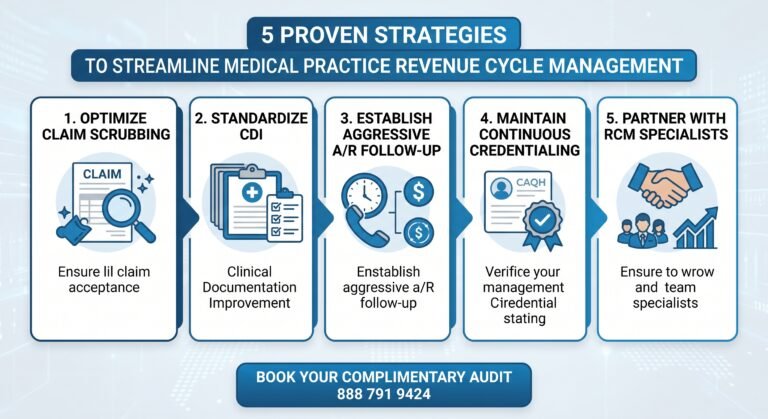
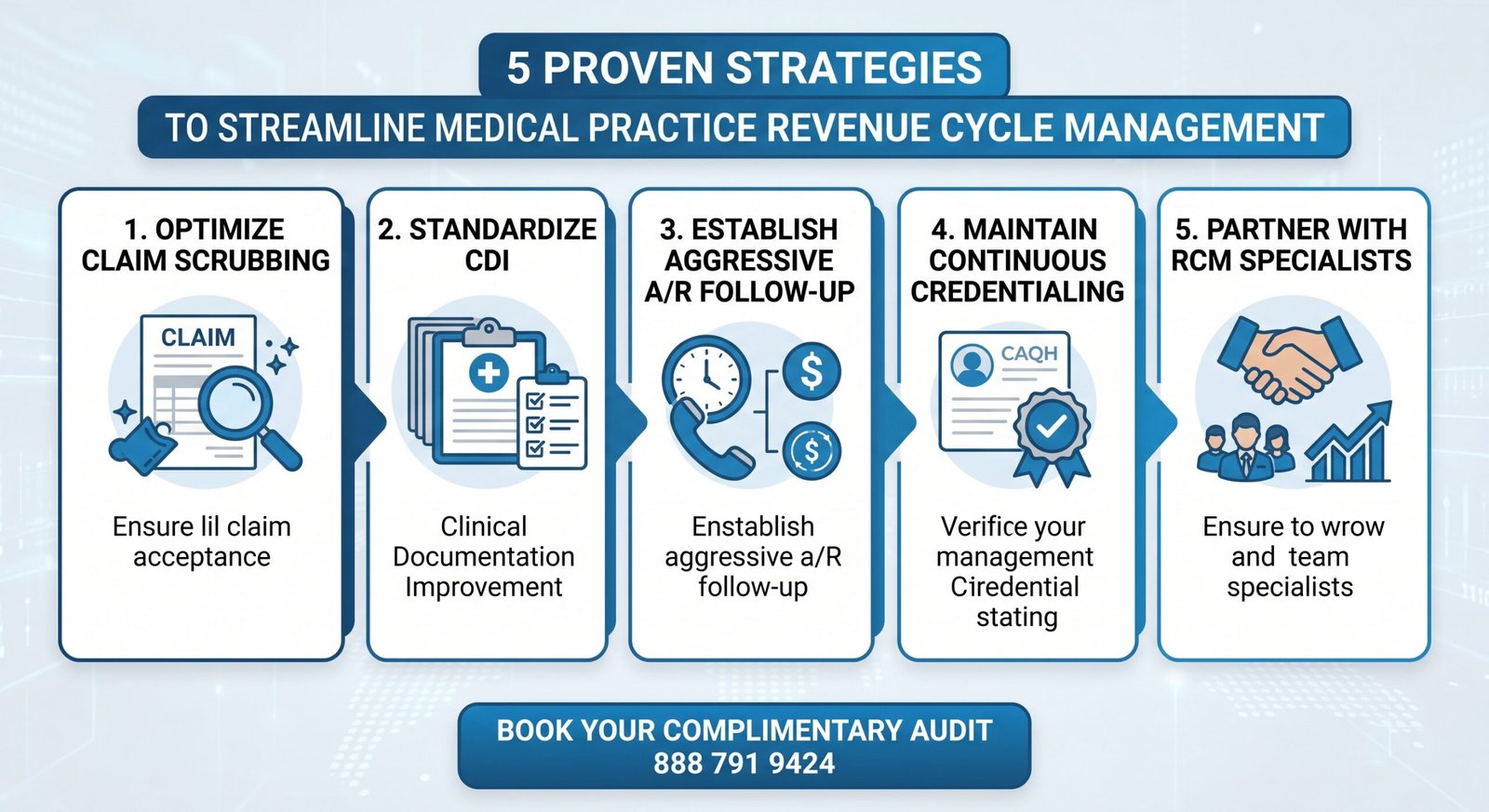
1. Optimize First-Pass Claim Rates with Specialty-Specific Scrubbing
General billing rules don’t cover specialty nuances. Code modifiers, billing bundles, and documentation requirements vary widely across medical fields. Utilizing tailored claim-scrubbing edits before submission ensures claims pass payer rules on the first attempt, maintaining a target first-pass clean claim rate of 95% or higher.
2. Standardize Clinical Documentation Improvement (CDI)
Coding accuracy relies entirely on clinical documentation. Continuous documentation reviews help providers accurately reflect service complexity (CPT/ICD-10-CM alignment), preventing downcoding and protecting your practice from audit liability.
3. Establish Aggressive Denial & A/R Follow-Up Timelines
Managing aged claims requires systematic tracking rather than ad-hoc checks. Organize unpaid claims into structured workflow queues:
- 0–30 Days: Automatic clearinghouse tracking and ERA/EOB posting.
- 31–60 Days: Immediate payer follow-up on unpaid claims and minor rejection fixes.
- 61+ Days: Targeted appeals backed by medical necessity documentation.
4. Maintain Continuous Provider Credentialing & CAQH Profiles
Lapses in payer enrollment or expired CAQH profiles lead to immediate claim rejections that cannot be retroactively billed in many states. Tracking re-credentialing deadlines 90 to 120 days in advance prevents coverage gaps and unbillable provider hours.
5. Partner with a Dedicated Revenue Cycle Team
Managing full-cycle RCM in-house often leads to billing burnout, high staff turnover, and overlooked denials. Outsourcing to certified RCM specialists offers enterprise-grade billing technology, specialized certified coders, and predictable collections without in-house overhead.
Maximize Your Practice Collections with MedStats Billing
MedStats Billing provides end-to-end revenue cycle management, certified medical coding, credentialing, and proactive denial resolution tailored to your practice’s specialty and EHR platform.
Discover where your revenue cycle is leaking cash. Request a Complimentary Billing Audit with MedStats Billing and let our certified revenue experts optimize your claims today.